There is something uniquely powerful about inherited jewellery.
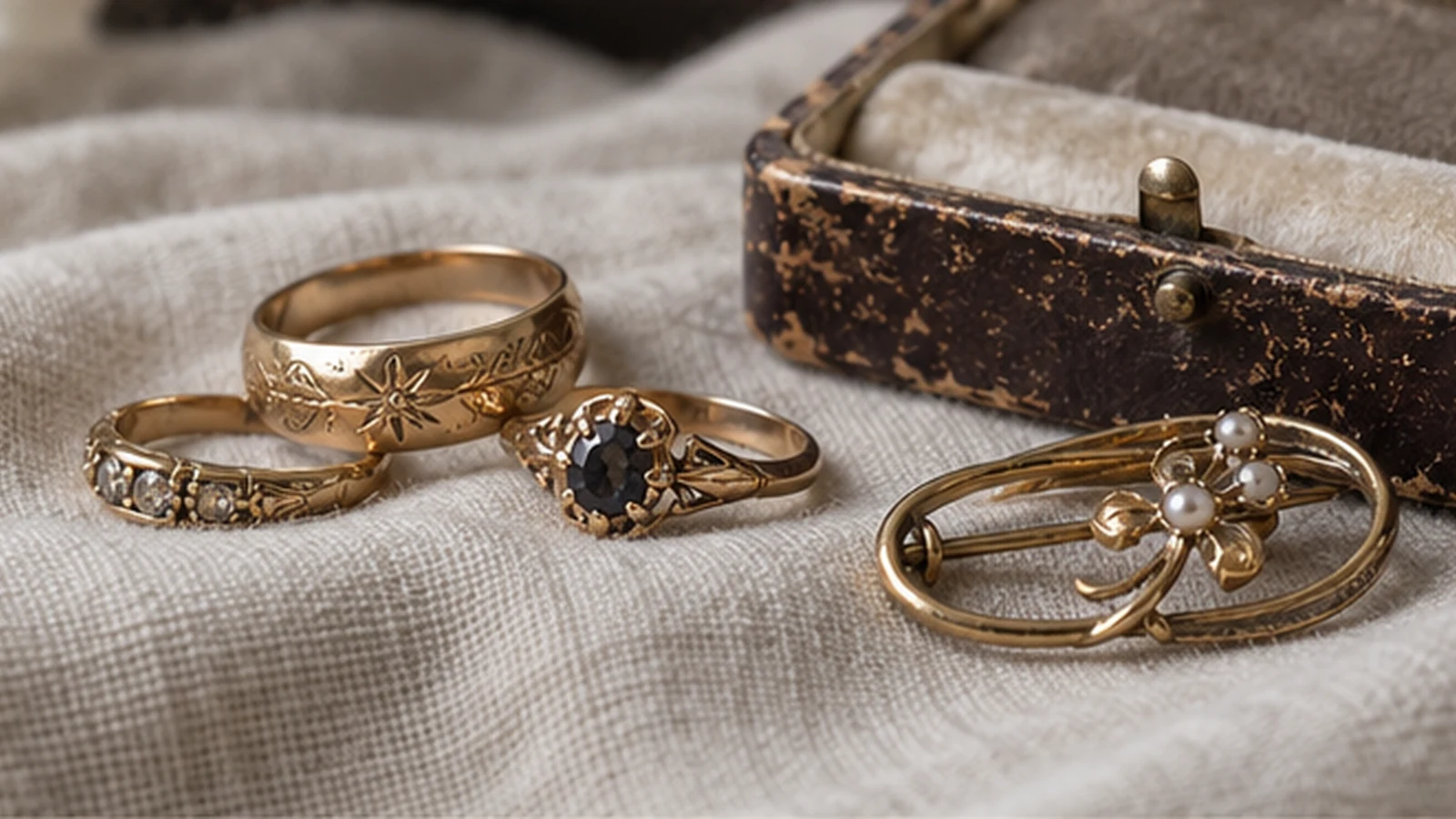
A ring, brooch or necklace may carry the memory of someone we loved. We may remember seeing it worn at family gatherings, resting on a dressing table or appearing in photographs long before it became ours.
But inheriting jewellery can also bring a complicated feeling that people do not always talk about.
You can love the person a piece came from without loving the jewellery itself.
Perhaps the style does not suit you. The ring is the wrong size. The setting feels too delicate for everyday wear. A brooch has sat untouched in a box for years, or several small pieces have been passed down through the family without any one of them feeling quite right.
This is where jewellery remodelling can become something very special.
Rather than leaving meaningful materials unworn, it may be possible to transform inherited gold and gemstones into a piece that belongs naturally in your own life – while still carrying something of the story that came before.
What does it mean to remodel inherited jewellery?
Jewellery remodelling is the process of reimagining an existing piece, or collection of pieces, into a new design.
That may involve resetting gemstones, incorporating inherited materials into a bespoke piece, changing the form or style of a ring, or combining elements from several pieces of family jewellery.
Sometimes the transformation is dramatic. An old cluster ring may become a contemporary pendant. Diamonds from several inherited pieces may be brought together in one new design. A gemstone that has spent decades in an elaborate setting may become the focus of something much simpler.
At other times, the change is deliberately subtle. A setting may be adapted to make a ring easier to wear, or a sentimental detail retained while the proportions are refined.
For me, the most important starting point is understanding what the jewellery means to you – and what you would like its next chapter to become.
Do I have to preserve the original piece?
No. People sometimes feel guilty about changing inherited jewellery, as though remodelling a family piece means disrespecting the person who owned it or erasing part of its history.
I understand that hesitation completely.
But jewellery is made to be worn, touched and lived with. If a piece remains permanently hidden because it does not suit your style or lifestyle, its story has almost been paused.
Remodelling can allow that story to continue.
A grandmother’s gemstone may become part of a ring worn every day. Gold from a family piece may contribute to a design marking a marriage, birthday or new beginning. Several small items may become one future heirloom.
You also do not have to preserve every physical component. Sometimes the most meaningful element is the central stone, a tiny engraving, a particular motif or simply the knowledge that something from the original piece remains present.
The question I often come back to is: what is it that you most want to carry forward?
Can inherited gemstones be reused?
Often, yes – but every gemstone needs to be considered individually.
Before designing around an inherited stone, it is important to understand what the gemstone is, what condition it is in and whether it is suitable for the intended new setting.
Some stones may have been worn for many decades. There may be chips, abrasions or earlier repairs that are not immediately visible. Others may be perfectly sound but require a different style of setting from the one you initially imagined.
Diamonds are famously durable, but they are not indestructible. Coloured gemstones vary enormously in hardness, toughness and sensitivity. An emerald, sapphire, opal and pearl all behave very differently at the jeweller’s bench and in daily wear.
This is why assessment matters.
When I work with inherited jewellery, I look carefully at the stones before deciding what is possible. Sometimes a gemstone can be removed and reset relatively straightforwardly. Sometimes the design needs to respond to its condition, proportions or vulnerabilities.
And occasionally, the most responsible advice is that a particular idea is not suitable.
For me, honesty at this stage is part of good bespoke practice.
Can old gold be melted down and reused?
Potentially, but this also depends on the material and the design.
Inherited gold may be suitable for reuse, but factors such as purity, alloy, condition, previous solder joints and unknown history can all affect what is practical.
A client may arrive with several pieces that look similar but are in fact different carats or different coloured gold alloys. Older jewellery may also contain solder, repairs or other materials that complicate direct reuse.
Sometimes existing gold can be incorporated into a new piece. In other cases, refining or exchanging the metal may be the better route.
This is one reason I prefer not to make sweeping promises before seeing the jewellery itself. The emotional story may be simple – “this was my mother’s gold” – while the technical reality requires a little more investigation.
That does not diminish the meaning. It simply allows us to make an informed decision about how best to honour the material.
What if I have several pieces of inherited jewellery?
This can create some of the most interesting remodelling projects.
Perhaps you have a small ring from one grandmother, a pendant from another and a loose gemstone that has been kept in the family for years. Individually, none of the pieces feels quite right. Together, they may become the starting point for something entirely new.
Combining inherited jewellery can be particularly meaningful when a new piece represents more than one person or branch of a family.
A bespoke ring might bring together stones from different generations. A pendant could incorporate gemstones belonging to several relatives. Small diamonds that once sat separately may be redesigned into one composition.
The finished piece does not need to look like a collage of the originals.
It can feel completely coherent and contemporary while quietly carrying all of those connections within it.
Can inherited jewellery become an engagement ring?
Yes, and this can be an incredibly meaningful choice.
An inherited diamond or gemstone may become the centre of a new bespoke engagement ring, connecting a future commitment with a family story that already exists.
But again, the stone needs to be assessed before the design is finalised.
Its dimensions, condition and suitability for everyday wear will influence the setting. An older cut diamond may have proportions that differ significantly from modern calibrated stones. A coloured gemstone may need additional protection.
The new ring should be designed around the actual stone rather than forcing it into a preconceived idea.
I find this process particularly moving because an engagement ring is already a piece about continuity and the future.
Bringing an inherited element into the design can create a tangible link between generations without requiring the new wearer to adopt somebody else’s exact style.
Can old jewellery become something completely different?
Absolutely. A ring does not have to remain a ring. A brooch does not have to remain a brooch.
An inherited necklace can become part of a bracelet. Gemstones from earrings might be brought into a pendant. A collection of small diamonds can create a beautifully irregular new composition.
Sometimes letting go of the original category creates much more freedom.
This is especially useful when a client likes the material but knows they will never wear the original type of jewellery.
There is little point preserving a brooch simply because it has always been a brooch if the person inheriting it never wears brooches.
The more useful question is: what would you genuinely live with?
The emotional side of remodelling jewellery
Some remodelling commissions are joyful from the beginning.
Others come with grief.
Jewellery may arrive shortly after a bereavement, or years later when somebody finally feels ready to open a box that has been kept untouched.
There is no correct timetable for this.
You may know immediately what you want to do. You may need to live with the jewellery for a long time before changing anything. You may begin a conversation and decide you are not ready after all.
That is completely valid.
A bespoke consultation is not simply about choosing a setting or discussing cost. It can also be about working out what you are comfortable changing, what you need to preserve and what the jewellery represents now that it has come into your hands.
Is jewellery remodelling a more sustainable choice?
Reusing existing materials can play a valuable role in a more circular approach to jewellery.
Precious metals and gemstones are capable of extraordinary longevity. Keeping them in use, adapting existing pieces and giving unworn jewellery a new purpose can make use of resources that already exist.
But, as with all conversations about ethical jewellery, I prefer nuance to easy claims.
Remodelling is not automatically impact-free. New work still requires energy, craftsmanship and sometimes additional materials, and not every component can necessarily be reused.
For me, the value lies in considering what we already have before assuming everything must begin with something new.
That principle is part of my wider approach to ethical jewellery and responsible sourcing.
How does the remodelling process begin?
Usually, with a conversation.
You do not need to arrive with a finished design.
Some clients know exactly what they want. Others bring a box of jewellery and say, quite honestly, “I have no idea what to do with any of this.”
Both are perfectly good starting points.
I will look at the existing pieces, talk through what is important to you and explore what may be technically possible. We can consider gemstones, metals, style, symbolism, lifestyle and budget before developing a direction.
The finished piece may preserve obvious elements of the original jewellery, or the connection may be almost invisible to anybody except you.
That is part of the beauty of bespoke work.
Giving old jewellery a new story
I do not think remodelling inherited jewellery is about erasing the past.
At its best, it is about allowing the past to move with us.
A piece that once belonged to somebody else can become part of your everyday life. A gemstone can be held in a new setting. Gold can take on a new form. Something unworn can become something touched, noticed and loved again.
And over time, the new piece begins to gather its own history.
This is what I find so powerful about jewellery.
Materials endure, but meaning evolves.
And sometimes, giving an old piece a new story is the most beautiful way to keep its original one alive.