When we talk about ethical jewellery, gold is often one of the first materials to enter the conversation. It is precious, enduring and infinitely desirable. It can be melted down, reshaped and passed from one generation to another. A single piece may hold financial value, emotional meaning and family history all at once.
And yet gold also has a complicated story.
Mining can support livelihoods and communities, but it can also be associated with poor working conditions, environmental damage, exploitation and a lack of transparency. At the same time, simply choosing something described as “recycled” does not answer every ethical question either.
This is why I believe it is important to look beyond easy labels.
I am often asked about the difference between Fairtrade gold, Fairmined gold and recycled gold. Is one automatically better than another? Does recycled gold mean no new mining? Are Fairtrade and Fairmined simply two names for the same thing?
The honest answer is that each represents a different approach. Understanding those differences can help you make a choice that reflects your own values.
Why does the source of gold matter?
Gold arrives at the jeweller’s bench at the end of a much longer journey.
Before it becomes an engagement ring, wedding band, amulet or future heirloom, it may have passed through mining, trading, refining and manufacturing processes involving many different people and organisations.
For me, responsible jewellery begins by asking questions about that journey.
Where has the material come from? Who has been involved in producing it? Is there meaningful traceability? What standards sit behind the claims being made? What do we genuinely know – and what do we not know?
These questions sit at the heart of my own approach to ethical practice. I do not believe there is one perfect material capable of solving every social and environmental problem. I believe instead in transparency, informed choices and a willingness to keep learning as better options become available.
What is Fairtrade gold?
Fairtrade gold comes from artisanal and small-scale mining organisations working within the requirements of the Fairtrade Gold Standard.
Artisanal and small-scale mining is an important source of livelihood in many parts of the world, but miners can face insecure conditions, weak bargaining power and limited access to formal markets. The Fairtrade model seeks to create opportunities for participating mining organisations while supporting improved working conditions and stronger organisations.
This matters because ethical sourcing is not simply about trying to remove mining from the picture. Millions of people depend directly or indirectly on mining for their livelihoods. A more thoughtful question is how responsible trade can support better conditions and give mining communities a fairer relationship with the value of the materials they produce.
Fairtrade gold therefore connects the finished piece of jewellery with a wider framework around standards, trade and development.
For a client, the appeal may be both practical and emotional. Gold is already a material rich with meaning. Knowing that greater consideration has been given to the people behind it can add another dimension to the story of a piece.
What is Fairmined gold?
Fairmined is a separate assurance label developed by the Alliance for Responsible Mining.
Like Fairtrade gold, it is closely connected with artisanal and small-scale mining. Fairmined-certified mining organisations must work within a standard covering areas including responsible mining practices, labour conditions, environmental protection, traceability and organisational development.
An important part of the model is the Fairmined Premium, which can support the continued social, organisational and environmental development of participating mining communities.
I have long been drawn to Fairmined gold because it makes the origin and human story of the material part of the conversation.
Gold is so often treated as an anonymous commodity. Once refined, its earlier journey can become almost invisible. A traceable route asks us to look again – not only at the shine and beauty of the finished object, but at the chain of people and places behind it.
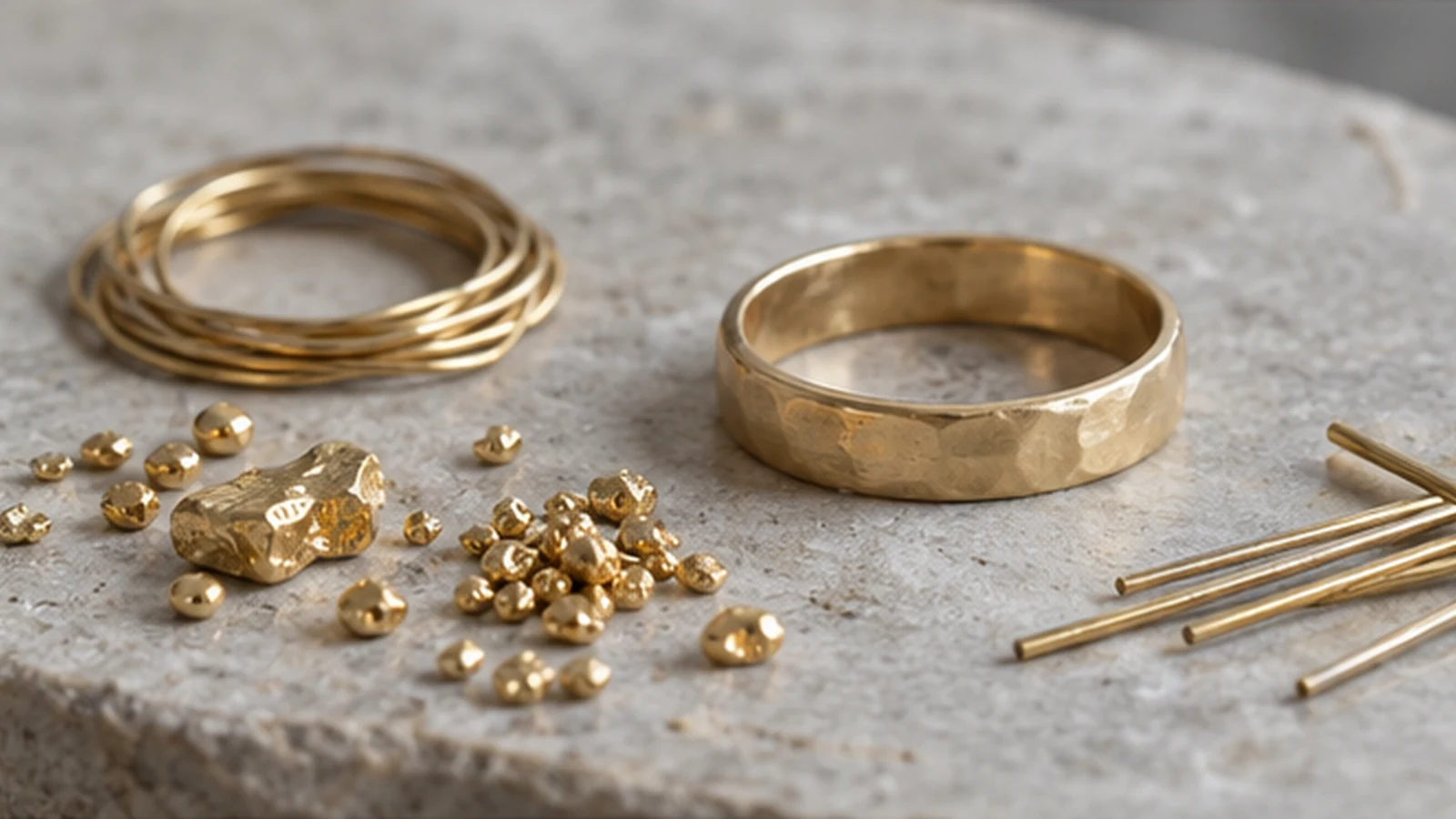
I have used Fairmined gold within my work and collections because I believe that provenance matters. My Fragments collection, for example, brings together uncut diamonds and Fairmined gold in pieces that deliberately celebrate the raw beauty and history of natural materials.
Are Fairtrade and Fairmined gold the same thing?
No. They are distinct standards and assurance systems.
They share some broad concerns – particularly the role of artisanal and small-scale mining, more responsible practices, stronger routes to market and improved outcomes for mining communities – but they are not interchangeable labels.
This is an important distinction because ethical jewellery terminology can quickly become confusing. Two materials may both represent thoughtful sourcing choices while reaching that point through different standards and supply chains.
I do not think the most useful question is necessarily, “Which label wins?”
A better question may be: what does this particular standard require, what can be traced, and how does this choice fit the values and practical needs of the piece being created?
What is recycled gold?
Recycled gold is gold that has already existed in another form and has been returned to the supply chain for reprocessing.
It may come from old jewellery, manufacturing material or other eligible sources before being refined and used again.
There is something inherently compelling about keeping a precious material in circulation. Gold can be melted and transformed repeatedly, which means existing metal can take on new forms and new meanings rather than simply being discarded.
But this is where nuance becomes important.
The word “recycled” can sometimes create the impression that a material has no environmental impact at all. I do not believe that is a safe assumption. Collection, sorting, refining, transport and remanufacture still involve processes and resources.
Recycled gold also does not necessarily tell us where the material was originally mined. Its earlier provenance may be unknown.
That does not make recycled gold a poor choice. Far from it. It simply means that recycled gold and traceable responsibly mined gold answer different questions.
One focuses on keeping existing material in circulation. The other may create a visible connection to a current mining community and a defined sourcing standard.
For me, these should not be flattened into a simplistic competition.
Is recycled gold more ethical than mined gold?
This is one of the questions I hear most often, and I do not think there is a universal answer.
A recycled material can offer clear advantages. It keeps valuable metal in use and may reduce the need for newly mined input within a particular product or supply decision.
But responsible artisanal and small-scale mining also supports real livelihoods. Choosing certified and traceable mined gold can help create demand for mining organisations working to meet stronger standards.
This is why I am cautious of statements that describe all mining as inherently bad and all recycled gold as automatically good.
The reality is more complex.
If responsible mining disappears from the conversation entirely, we also risk turning away from the people whose livelihoods depend upon it. Better standards, improved working conditions, environmental requirements and fairer routes to market all need active support.
Ethical practice, to me, is not about finding a perfect slogan. It is about engaging honestly with complexity.
What about inherited gold and old jewellery?
This is another area I feel passionately about.
Sometimes the most meaningful material is already in your possession.
An inherited ring, a broken chain, a piece of jewellery that no longer suits your life or gemstones that have been sitting unworn for decades may hold enormous emotional value.
Through my jewellery remodelling work, I help clients explore whether existing materials can become part of something new.
Not every material can always be reused in exactly the way a client first imagines. Metals may require assessment, and gemstones need to be checked for condition and suitability. But where possible, remodelling can create an extraordinary bridge between past and future.
I find this particularly moving because the material is not simply “recycled” in an abstract sense. Its story is already known.
A ring may have belonged to a grandmother. A stone may have marked a marriage or a chapter in someone’s life. Reworking those materials allows their history to continue while creating something that genuinely belongs to the next wearer.
So which type of gold should I choose?
My answer is always: begin with what matters to you.
You may feel strongly about supporting certified artisanal mining communities. You may be drawn to the traceability of Fairmined gold. You may prefer to keep existing material in circulation through recycled gold. You may have inherited jewellery with a deeply personal history.
You may also find that the right answer depends on the piece.
A bespoke engagement ring has different practical requirements from a simple wedding band. A sculptural design may need particular alloys or components. An inherited stone may completely change the direction of a commission.
This is why conversation matters.
When I work with clients on bespoke engagement rings and wedding jewellery, materials are part of the design process from the beginning. We can talk openly about provenance, sourcing, budget, symbolism and what feels most aligned with your priorities.
There is rarely one single route.
My approach to ethical jewellery
I have spent many years developing my approach to responsible sourcing, but I never see ethical practice as a finished task.
Supply chains change. Standards evolve. New materials become available. New questions emerge.
My role is to remain curious, to ask difficult questions of suppliers, to be transparent about what I know and to avoid pretending that any material is magically without impact.
Within my work, that may mean choosing Fairtrade or Fairmined precious metals, using recycled materials, sourcing carefully selected gemstones, remodelling inherited jewellery or combining different approaches according to the needs of a piece.
I believe beauty and responsibility should belong in the same conversation.
After all, jewellery is created to carry meaning. It marks love, identity, commitment, memory and change. The materials we choose become part of that story.
And for me, the most beautiful pieces are not only considered in how they look, but in how they came to be.